
Can a Sherwani Be Altered?
Alterations are rarely the first thing on a groom’s mind. You are focused on finding the right fabric, the right embroidery, the right colour. Then the sherwani arrives, and something about the fit feels off. It might seem minor, but for a wedding outfit, even minor aspects feel significant. The question becomes: can this actually be fixed?
It can, in many cases. But how much can be changed depends largely on how the garment was put together. Understanding this before you hand anything to a tailor is genuinely useful.
In this blog, we will cover what sherwani alterations realistically involve and where the limitations tend to appear. At Hena’s Kapray, we create custom sherwanis for grooms. Fit-related questions are ones we deal with all the time.
Why Altering a Sherwani Requires Specific Knowledge
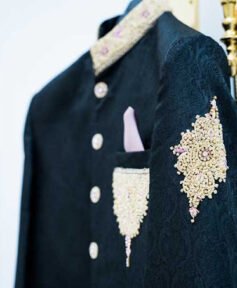
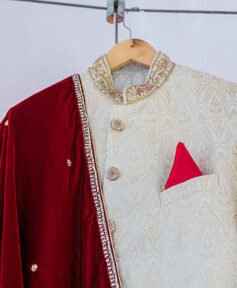
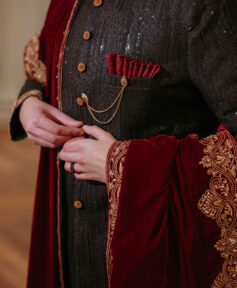
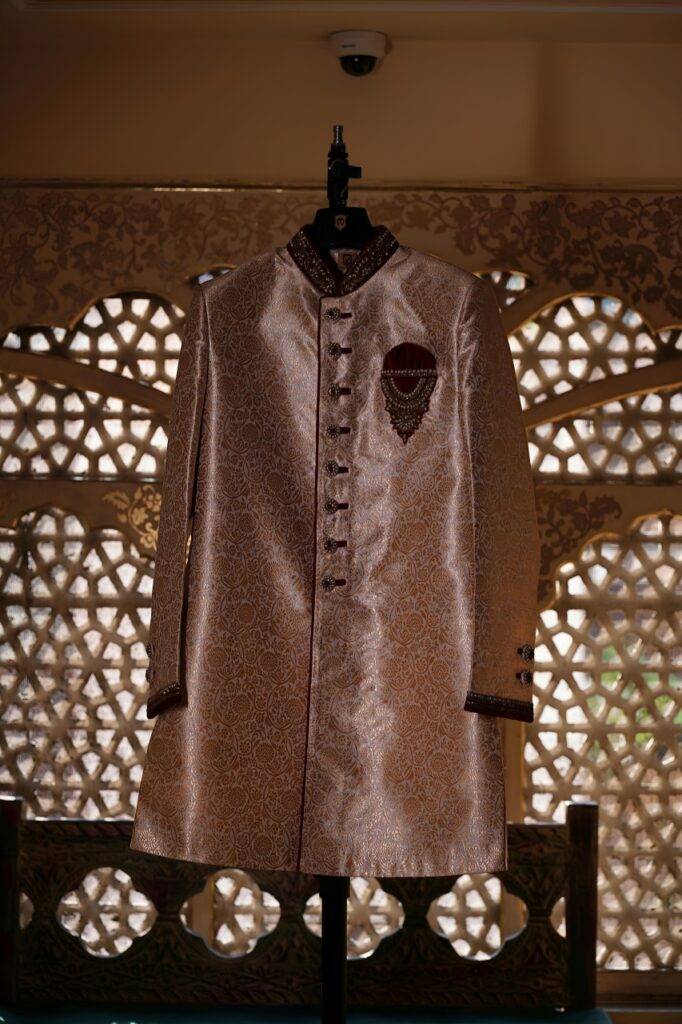
From the outside, a sherwani is a long, structured coat. From the inside, it is a layered construction involving outer fabric, a full lining, interfacing in areas that require shape and stiffness, and, in most formal pieces, hand embroidery covering sections of the chest, collar, or hem. All of these layers work together to produce the silhouette and fall of the garment.
Change one thing, and others shift with it. A tightened side seam pulls the lining. Adjusting the midsection creates tension that travels up or down through the coat. Embroidered panels that were balanced when the garment was first cut may no longer sit correctly once structural changes are made.
This does not rule out alterations. What it rules out is taking your sherwani to someone who has only worked on western tailoring and expecting a clean result.
Which Adjustments Are Workable
An experienced tailor can handle a range of changes:
- Hemming the coat shorter, or letting it down if the allowance exists
- Taking in the side seams or releasing them slightly
- Shortening or extending sleeve length
- Adjusting the collar or neckline area
- Tapering the coat through the torso
- Replacing buttons or modifying the front closure
In every case, the deciding factor is seam allowance, meaning the fabric left inside the seams beyond the stitch line. If your sherwani was made with care, there will likely be enough allowance for small changes. A mass-produced piece may have almost none, which limits what can be done without visibly affecting the garment’s finish.
Ready-Made Sherwanis and the Limits of Altering Them
When a sherwani is produced for general retail, it is cut to a standard size. The embroidery is applied based on that size, and everything is calculated for a particular set of standard measurements.
When your measurements differ meaningfully from that standard, the corrections needed can be more extensive than they first appear. Moving a seam shifts the relative position of everything around it, including embroidered sections placed with the original sizing in mind. Restoring that visual balance is not possible once the changes have been made.
Custom construction works differently. Your measurements determine the structure from the beginning. The coat length, sleeve width, collar height, and embroidery placement are all set according to your measurements. When fit is the starting point rather than an afterthought, the finished sherwani rarely needs significant correction.
At Hena’s Kapray, every sherwani is built from scratch, to order. We work with grooms through consultations and share regular progress updates throughout. If anything needs adjusting, it is handled during production, well before delivery.
Things Worth Checking Before Any Alteration
If your sherwani needs attention, work through these before committing to any changes:
- Locate the exact area where the fit problem exists
- Check whether that area is near the embroidered sections
- Confirm the tailor has experience with South Asian formalwear
- Ask whether an adequate seam allowance exists where the change is needed
- Confirm the cost and expected turnaround time
It is also worth asking yourself whether the problem is structural at all. How the churidar sits, or the way the dupatta is positioned, can alter the entire appearance of the outfit. Ruling out a simple styling adjustment before pursuing alterations is always a sensible first step.
The Risks Involved with Embroidered Garments
Embroidery is where alteration risk becomes most serious, and is worth understanding before you proceed. When a seam that needs changing runs close to an embroidered area, the work can disturb the design. Hand embroidery cannot be reproduced on a single section of a coat that matches the rest convincingly. If it is pulled or cut into during an alteration, that damage is largely permanent.
The lining adds another challenge. Any seam work on a fully lined sherwani requires the lining to be carefully separated and reattached afterwards. When that step is handled carelessly, the drape of the coat changes in ways that are hard to correct. Skilled work by the right person can improve fit without these problems, but the margin for error is smaller than with most garments.
Conclusion
Sherwani alterations are possible, and for some garments, they work well. For others, embroidery placement, limited seam allowance, or lining complexity make meaningful changes difficult to execute cleanly. The quality of the original construction sets the ceiling for what can realistically be achieved afterwards.
If you want to avoid this situation entirely, a custom-made sherwani built around your measurements from the start is the more dependable path.
Contact Hena’s Kapray to order a custom sherwani made precisely to your measurements. We craft groom sherwanis with consistent updates shared throughout the entire process. Get in touch with us today to start planning your wedding look.
Related Posts